A creator holds a product close to the camera, names the problem, and says, “This changed everything.” The opening may stop the scroll. It still has not shown the product doing anything.
That distinction matters when a creative team reviews UGC-style ads. A strong hook answers, “Why should I keep watching?” Product proof answers a different question: “What can I now see, hear, or verify about this product?” In a finished video, usable product proof usually appears where the edit connects four things without asking the viewer to fill in the missing step:
- the correct product;
- the relevant action;
- an observable output; and
- wording that stays inside what the footage can support.
A fifth question sits outside the footage: what independent support, if any, substantiates the broader outcome being advertised?
The examples below are not presented as proven winners. They are source-linked creative records inspected at the level that was publicly accessible: a hosted frame, a written case record, a producer description, or platform metadata. A poster image is not treated as a played video, and ad-library presence is not treated as sales evidence.
This guide therefore does two separate jobs: it reads only what those accessible frames and records support, then turns the missing visual evidence into concrete shot plans.
Product proof is not one score
“Authentic” is too vague to be a useful approval criterion. A selfie-style video can be scripted. A genuine customer can make a claim the footage does not demonstrate. A technically clear demo can contain no testimonial at all. Review these questions separately instead.

Here is the practical meaning of each step:
| Review question | What the creative may establish | What it does not automatically establish |
|---|---|---|
| Is the product identifiable? | The viewer can connect the object or interface to the named product. | That the product was used in the critical action. |
| Is the use visible? | The viewer can see contact, installation, application, input, or control. | That the advertised result followed from the action. |
| Is the output observable? | A state change, sound, readout, texture, or immediate appearance is perceptible. | Long-term efficacy, typical results, or causation. |
| Does the claim match? | The words describe the same unit, condition, and time horizon as the shot. | That the claim has adequate substantiation. |
| Is there external support? | Testing, records, certification, or documented provenance may support a broader claim. | That the ad itself displayed that support clearly or fairly. |
This is also why “UGC” needs a provenance label. In this article, creator-made UGC-style content means a creator-presented commercial format; it may be commissioned and scripted. Customer-created material means the source supports that a customer made the material, not merely that the video looks casual. A testimonial is a first-person assertion about experience or results. Those categories can overlap, but none should be inferred from visual style alone.
A public Puure product-demo record on Vimeo, for example, says the producer used the client’s script and set out to show design, installation, and filtration in under a minute. That supports a scripted commercial-production context. It does not, by itself, establish paid media distribution, an independent customer experience, or conversion performance.
Four accessible UGC-style frames show four different proof depths
The Cohley UGC gallery and its tutorial category expose hosted poster frames for multiple brand examples. Those frames are useful for a narrow visual question: what information is present in this image? They are not reliable evidence of the opening, sequence, audio, duration, or outcome of the full video.
That limitation is technical, not merely cautious wording. Mux’s current image documentation says that a thumbnail request without a specified time uses the asset’s configured thumbnail_time or otherwise the middle of the original video. A default thumbnail therefore cannot be labeled “the first frame” or assigned an invented timestamp.
| Example and accessible record | What is visibly established | What remains unestablished |
|---|---|---|
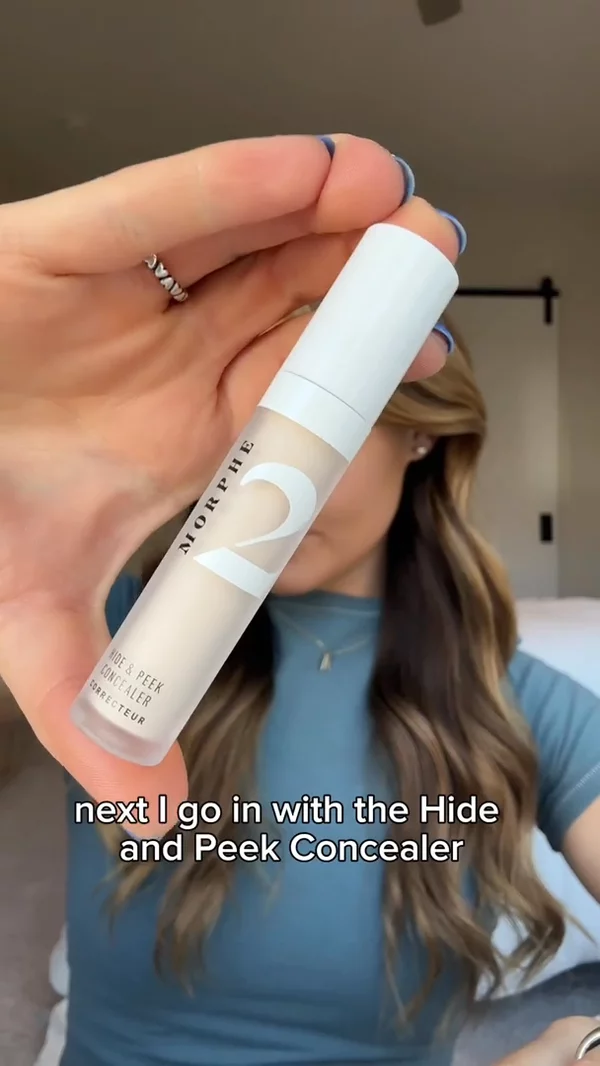
| Morphe Hide & Peek Concealer poster frame | The tube is legible in the foreground, and the overlay says the creator will use the concealer next. Product identity and the next routine step are clear. | Application, coverage, finish, wear, the complete spoken claim, and paid-ad status are not visible in this frame. |
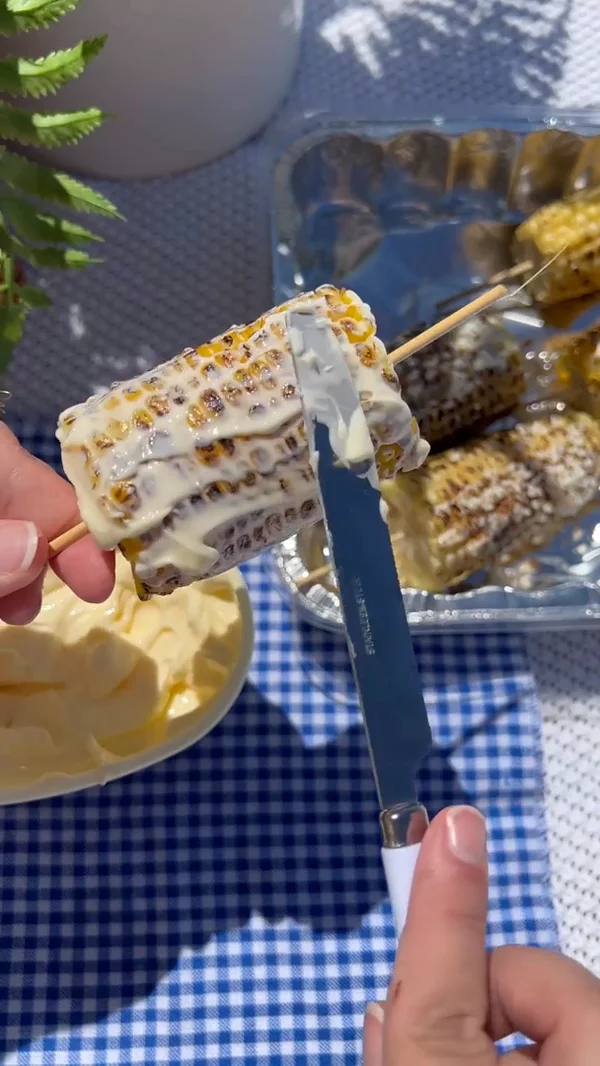
| Challenge butter-on-corn poster frame | A knife is spreading a pale product onto grilled corn. Product-to-surface contact is visible. | Taste, melting speed, ingredient superiority, the identity of everything used, and whether the full edit contains a testimonial are unknown. |
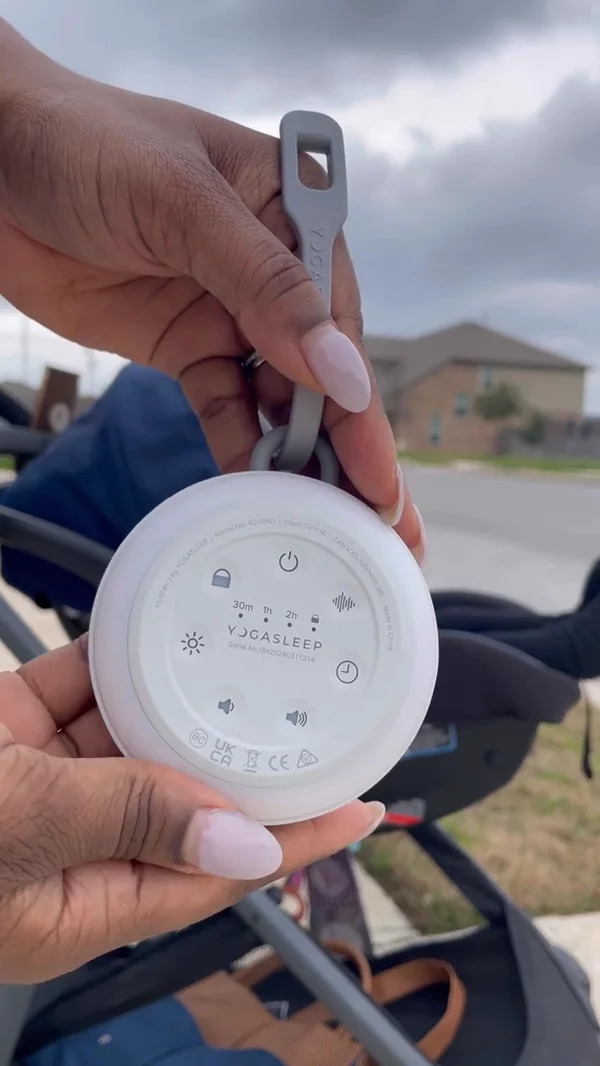
| Yogasleep portable sound-machine poster frame | The device, strap, power control, timer markings, and volume controls are visible. The frame can orient a viewer to the interface. | The device’s output cannot be heard. Loudness, sound quality, battery behavior, and any sleep outcome are not demonstrated. |
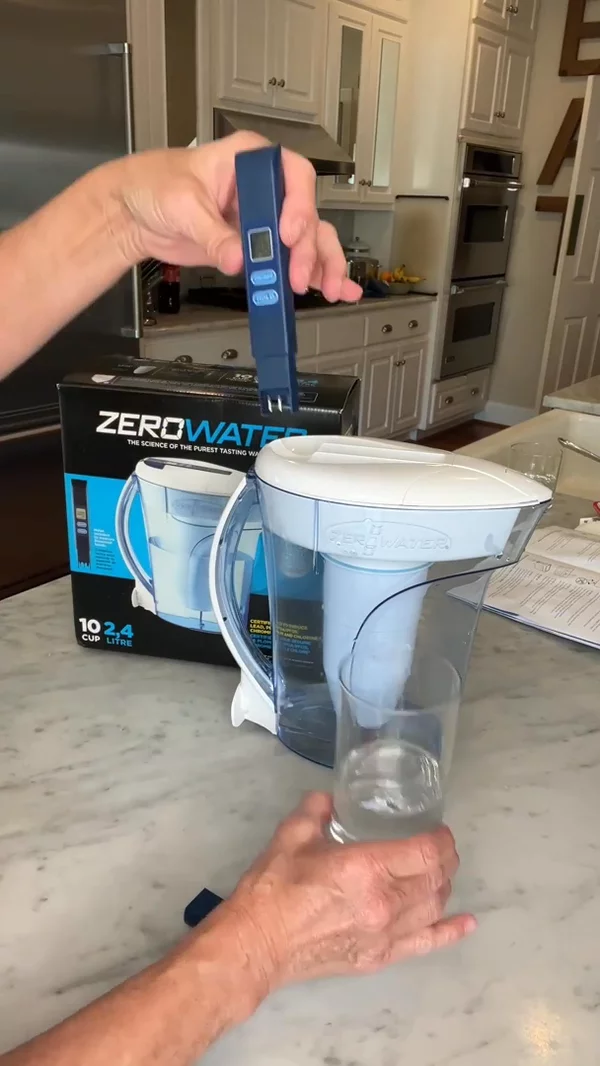
| ZeroWater pitcher-and-meter poster frame | A branded pitcher, a handheld meter, and a glass form a recognizable measurement setup. | The display is not readable in the frame. No before/after value, contaminant result, repeatability, or causal conclusion can be taken from it. |
These examples show why “product shown” is not a binary checkbox.
The Morphe frame performs an identity job. The Challenge frame goes one step further by showing contact. The Yogasleep frame exposes controls but not the output those controls produce. The ZeroWater frame gives the visual grammar of a test without giving the result of one.
The right creative note follows the missing link. “Show more product” is not useful when the product is already prominent. Better notes would be:
- Morphe: keep the applicator, contact area, and immediate finish in one intelligible sequence.
- Challenge: keep the product, utensil, and surface visible through the critical spread; remove any speed comparison that was not actually measured.
- Yogasleep: record the device’s own output while the same visible control changes; do not substitute stock ambience for product sound.
- ZeroWater: make both readings legible, identify what the meter measures, and keep contaminant-specific claims separate from a general meter change.
A measurement scene can look stronger than the measurement really is
Meters, timers, scales, side-by-side objects, and before/after frames make a creative feel evidentiary. The instrument only supports the variable it actually measures.
ZeroWater’s current FAQ says its included meter reports total dissolved solids in parts per million and explicitly says the meter is not intended to measure lead or PFOA/PFOS levels. The same page also notes that the meter cannot detect uncharged organic contaminants or undissolved particles such as bacteria. NSF’s guide to residential water-treatment standards likewise distinguishes standards for aesthetic impurities from standards covering contaminants with health effects.
Consider a clearly fictional teaching calculation. A meter falls from 240 ppm to 12 ppm:
(240 − 12) / 240 × 100 = 95%
It is accurate to say, “In this hypothetical example, the meter reading falls by 95%.” It is not accurate to turn that arithmetic into “The product removes 95% of toxins.” The second sentence changes the measured variable, introduces an undefined category, and implies a product test that never occurred.
For any “proof” shot built around a number, record four things in the brief: the unit, the starting condition, the ending condition, and the exact claim the number is meant to support. Then ask what the instrument cannot detect. A dramatic number with the wrong denominator or variable is not stronger proof; it is a more persuasive mismatch.
Read the claim around the demonstration
A product action does not live in isolation. Voiceover, overlays, beauty filters, editing, music, reaction shots, and before/after composition can make a narrow action imply a much broader result.
A useful counterexample appears in the UK Advertising Standards Authority’s 2021 Tanologist ruling. The source record describes an Instagram Story in which the creator held up tanning drops, mixed them with moisturizer, and applied the mixture. The advertiser argued that the video was an application demonstration and that the product’s after-effects had not yet developed.
But the recorded message also included statements about waking up with a “beautiful glow,” not breaking out, and recommending the product. A beauty filter affected skin tone and complexion. The ASA assessed the overall impression and concluded that the filter was directly relevant to the conveyed tanning and smoothing effects. The complaint was upheld.
This is a dated UK ruling, not a universal legal rule for every market. Its creative lesson is broader: “This shot only shows application” is not a complete review when the surrounding edit tells viewers they are also seeing the result. Review the demonstration and the claims wrapped around it as one message.
The ASA’s separate Skinny Tan ruling also shows why provenance needs care. The brand said it reposted complimentary creator Stories without paying for them or having an official commercial relationship. The creator said the brand had sent the product as a collaboration, with no payment or contractual obligation to post; the source also records #ad, #gifted, and a paid-partnership tag on one original Story. That is not a clean example of an independent customer buying a product and spontaneously documenting it. “Unpaid” and “independent customer” are not synonyms.
When reviewing an edit, ask what the viewer is being invited to infer from all of these layers:
- Is the creator describing the visible action, an immediate impression, or a later outcome?
- Does a reaction shot imply taste, relief, confidence, or effectiveness that the product shot did not establish?
- Does a filter, color grade, cut, or lighting change affect the exact result being advertised?
- Is an apparent before/after comparison matched for framing, exposure, pose, timing, and processing?
- Does the CTA repeat or escalate a claim that the body of the ad never demonstrated?
A testimonial is an assertion, not an independent test
A testimonial can be valuable evidence of what a particular person says they experienced. It is not, by itself, independent verification that the product caused the outcome, that most buyers will obtain it, or that an objective performance claim is substantiated.
The US Federal Trade Commission’s current endorsement guidance says an endorser cannot talk about an experience with a product they have not tried, cannot suggest regular use after trying it only once, and should not make claims requiring proof the advertiser does not have. The FTC’s Advertising Substantiation Policy Statement separately addresses the advertiser’s need for a reasonable basis for express and implied objective claims before dissemination.
For a creative team, that produces a simple division of labor:
- The footage can show an action and an observable output.
- The testimonial can accurately report the speaker’s real experience and opinion.
- The substantiation file supports objective claims that require evidence beyond one person’s story.
- The disclosure explains a material relationship where required.
Do not ask a creator performance to do all four jobs. A line such as “I use this every night” is not harmless texture if the creator has not done so. “This cured my breakouts” is not rescued by filming a real application. And a genuine enthusiastic reaction does not establish comparative superiority.
Turn the missing proof into a filming treatment
The fastest way to improve a weak review is to replace an adjective with a shot requirement. Instead of “make it more convincing,” specify the product, action, output, continuity condition, claim boundary, and rejection rule.
The storyboard below is an original teaching example for a fictional concealer. Its timings are proposed production timings, not timestamps observed in a brand ad. It is designed to support one narrow proposition: the appearance immediately before and after application in a controlled, intelligible sequence.

| Proposed time | Required shot | Example copy | Approval condition |
|---|---|---|---|
| 00:00–00:06 | Show the untreated area and the exact product in the same setup. | “Watch this one area before and immediately after application.” | Lock camera angle, lighting, exposure, and color treatment. |
| 00:06–00:16 | Keep the applicator, contact area, and product use visible through the critical step. | No voiceover over the contact moment. | Do not call it “uncut” unless it is actually continuous. Extend the shot if the real action takes longer. |
| 00:16–00:21 | Return to the same angle and show the immediate appearance. | “This is the appearance immediately after application.” | No long-term, treatment, or typical-results claim is added. |
| 00:21–00:24 | Show the product and a destination that contains the promised information. | “See the shade and application details.” | The landing page must support that narrow CTA. |
The control choices—matched light, fixed framing, and visible continuity—make the scene easier to interpret. They do not independently prove efficacy. A product can be filmed honestly and still require evidence for wear time, skin benefits, or comparative performance.
Two other proof-focused treatments follow the same method:
Treatment 2: show surface contact, not a taste verdict
For a spread used on grilled corn, begin with the surface and task, identify the product and utensil, then keep the loading and spreading action in one intelligible shot. End on the visibly coated area.
A supportable line is: “Here is the coated area.”
A line to reject is: “Melts twice as fast.” That comparison needs a defined competitor or baseline, equivalent starting conditions, and a timing method. The shot can show application without pretending it measured speed or taste.
Treatment 3: demonstrate a control, not a sleep outcome
For a portable sound machine, show the control and starting state, switch the device on, record the device’s own sound, and change one visible setting while the output remains audible. Do not cover the sample with stock relaxation audio.
A supportable line is: “Here is how this control works.”
A line to reject is: “You’ll sleep better tonight.” A control demonstration does not measure a sleep outcome. Even the phone recording is not a calibrated loudness test; its value is that the viewer can connect the visible input to the audible output.
Use a completed proof review, not “looks authentic”
A useful approval record can be short. It should still force the reviewer to separate observation from interpretation. Here is a filled review for the fictional concealer treatment above:
| Review field | Recorded answer | Decision |
|---|---|---|
| Hook | One face area is identified for an immediate before/application/after sequence. | Keep. It creates a clear viewing task without promising a long-term result. |
| Product identity | Fictional FieldTone tube is visible before contact. | Keep the label readable; do not swap products during the action. |
| Visible use | Applicator and contact area remain in frame during the critical step. | Approve only if the final edit preserves continuity. |
| Observable output | Immediate appearance is shown in matched framing. | Describe only the immediate appearance. |
| Testimonial assertion | None is required for this demonstration. | Do not add invented habitual-use or skin-health language. |
| Claim match | “Immediately after application” matches the shown time horizon. | Approve. Reject “all-day,” “heals,” or typical-results wording without separate support. |
| Offer and CTA | CTA points to shade and application details. | Verify the destination contains those details. |
| External support | None supplied for wear, treatment, or comparative claims. | Keep those claims out of the creative. |
This record is more useful than a single proof score. A score hides which link failed. A production note should tell the creator what to film, the editor what not to imply, and the approver what evidence is still outside the asset.
Keep provenance and performance in separate columns
The casual appearance of UGC-style creative does not tell you who wrote it, whether the creator bought the product, whether a brand gifted it, whether it ran as paid media, or whether it sold anything.
A current TikTok Creative Center record for a WGU ad illustrates the metadata problem. The readable record identifies the United States, an objective of Video Views, a caption beginning #ad, and a “CTR Top 38%” label. TikTok’s About Top Ads page, last updated May 2025, says Top Ads contains advertiser-authorized creatives and offers performance analysis.
Those facts support a limited conclusion: this is an authorized ad record with a disclosed caption and a video-views objective. They do not justify rewriting “CTR Top 38%” as a 38% click-through rate, calling the ad a sales winner, or claiming conversion performance. A relative platform label, an engagement graph, and a business outcome are different data.
Keep at least these fields separate in your own example library:
| Field | Acceptable evidence | Common mistake |
|---|---|---|
| Creative source | Original brand, creator, producer, or platform URL. | Linking a third-party gallery as though it were the original post. |
| Relationship | Paid commission, gift, affiliate arrangement, customer purchase, or unknown—based on a source. | Calling anyone on camera a “real customer.” |
| Script status | Creator-written, client-scripted, collaborative, or unknown. | Assuming selfie-style delivery is unscripted. |
| Distribution status | Paid-ad record, brand organic post, creator organic post, or unknown. | Treating a portfolio sample as a live ad. |
| Testimonial status | First-person experience assertion actually present in the accessible record. | Treating every creator appearance as a testimonial. |
| Performance | Defined metric, denominator, period, objective, and source. | Inferring sales from visibility, likes, longevity, or gallery inclusion. |
This separation protects both analysis and production. It lets you learn from a useful product shot without inventing a success story around it.
The product-proof checklist
Before approving a UGC-style ad, review the final edit—not only the script, raw footage, poster, best-looking frame, or transcript. When the available record is narrower, label the observation accordingly instead of marking visual proof complete.
- Name the exact claim. Write the noun, unit, condition, comparison, and time horizon. “Works better” is not reviewable.
- Separate spoken timing from visual evidence. Use an actual timed transcript only to locate spoken claims, spoken offer language, and spoken CTAs. Do not use it to identify the first frame, product visibility, visual action, visual outputs, or continuity.
- Locate visual proof with visual evidence. Play the final asset when reviewing motion. For a static observation, inspect the actual frame tied to a verified timestamp. Record a visual timestamp only when playback or a verified frame extraction supports it—not when a poster, thumbnail, description, or transcript merely suggests the scene.
- Inspect continuity in playback. Look for product swaps, hidden steps, speed changes, unmatched before/after conditions, and edits that obscure the causal moment. An isolated frame cannot establish what happened between cuts.
- Check every sensory substitution. Stock sound, reaction footage, filters, color changes, and overlays can imply an output the product did not produce on camera.
- Separate immediate from delayed results. An application shot can show application. It does not automatically show tomorrow morning, week four, or typical use.
- Verify the testimonial. Confirm the speaker’s real experience, the material relationship, and whether the wording goes beyond that experience.
- Match external evidence to the claim. A meter, certificate, study, or test supports only its actual variable, product, population, conditions, and period.
- Record distribution and performance independently. “This ran as an ad” and “this drove profitable sales” require different evidence.
- Write a shootable revision. Replace “more authentic” or “more proof” with a required shot, preserved condition, approved line, and rejection rule.
A hook earns attention. Product proof earns understanding. The strongest UGC-style creative does not ask a creator’s confidence, a dramatic prop, or an ad-library badge to stand in for the missing evidence. It shows the product, preserves the critical action, makes the output legible, and stops the claim exactly where the evidence stops.
Sources
- 100+ UGC video examples, Cohley. Gallery and hosted example context; checked September 8, 2026.
- Tutorial UGC video examples, Cohley. Tutorial-category example context; checked September 8, 2026.
- Morphe Hide & Peek Concealer hosted poster frame, Cohley-linked media hosted by Mux; checked September 8, 2026.
- Challenge butter-on-corn hosted poster frame, Cohley-linked media hosted by Mux; checked September 8, 2026.
- Yogasleep portable sound-machine hosted poster frame, Cohley-linked media hosted by Mux; checked September 8, 2026.
- ZeroWater pitcher-and-meter hosted poster frame, Cohley-linked media hosted by Mux; checked September 8, 2026.
- Get thumbnails and images from a video, Mux. Thumbnail-time behavior; checked September 8, 2026.
- Water Filtration Systems Frequently Asked Questions, Culligan ZeroWater. TDS-meter scope and limitations; checked September 8, 2026.
- NSF Standards for Water Treatment Systems, NSF. Certification-scope distinctions; checked September 8, 2026.
- ASA Ruling on We Are Luxe Ltd t/a Tanologist Tan in association with Cinzia Baylis-Zullo, ASA, February 3, 2021.
- ASA Ruling on Skinny Tan in association with Elly Norris, ASA, February 3, 2021.
- FTC’s Endorsement Guides: What People Are Asking, Federal Trade Commission. Current plain-language endorsement guidance; checked September 8, 2026.
- FTC Policy Statement Regarding Advertising Substantiation, Federal Trade Commission, November 23, 1984.
- About Top Ads, TikTok for Business, last updated May 2025.
- TikTok Top Ads record: WGU ad ID 7651007183426207745, TikTok Creative Center; checked September 8, 2026.
- Product Demo for Puure, Kraken Media on Vimeo; checked September 8, 2026.